20 April 2026
As India marches toward its goal of 500 GW of non-fossil fuel capacity, the sight of solar panels has become commonplace. However, for a new buyer in 2026, a fundamental question arises: Should I put the panels on my roof or install them on the ground?
While rooftop solar is the go-to for urban homes, ground-mounted systems are gaining massive traction in rural areas, large-scale industries, and farmhouses. Each setup has its own set of technical requirements, costs, and efficiency levels.
In this guide, we’ll break down the pros and cons of each to help you decide which configuration fits your energy goals.
1. Rooftop Solar Systems: The Urban Powerhouse
Rooftop solar is the most popular choice for residential users and SMEs with limited land availability.
The Pros:
Space Optimization: It utilizes “dead space” that otherwise serves no functional purpose.
Lower Installation Cost: Since the roof provides a ready-made elevation, you don’t need a heavy, ground-anchored foundation.
Protection for the Roof: Solar panels act as a secondary shield, often keeping the top floor of the building significantly cooler during Indian summers.
The Cons:
Orientation Limits: You are restricted by the existing angle and direction of your roof.
Shadow Obstacles: Rooftops are prone to shadows from water tanks, chimneys, or neighboring buildings.
Expansion Challenges: Once the roof is full, adding more capacity is difficult without major structural changes.
2. Ground-Mounted Solar Systems: The High-Yield Performer
Ground-mounted systems are typically installed on open land and are preferred by large-scale industrial units and agricultural users.
The Pros:
Perfect Orientation: Unlike rooftops, ground mounts can be perfectly aligned to the South at the ideal tilt angle to capture maximum sunlight.
Bifacial Advantage: In 2026, ground mounts often use Bifacial Panels, which capture sunlight from both the front and the back (reflected from the ground), increasing yield by up to 15%.
Ease of Maintenance: Cleaning and repairing panels is much easier when they are at ground level compared to a high-rise rooftop.
Air Circulation: Better airflow around the panels keeps them cooler, which prevents efficiency drops due to overheating.
The Cons:
Higher Upfront Cost: You need to invest in a robust civil foundation and more extensive wiring (DC cabling) to reach the main electrical panel.
Land Use: It consumes land that could otherwise be used for gardening, parking, or agriculture (though “Agrivoltaics” is solving this in 2026).
3. Comparing the Two: At a Glance
| Feature | Rooftop Solar | Ground-Mounted Solar |
|---|---|---|
| Ideal For | Homes, Offices, Urban SMEs | Factories, Farms, Large Estates |
| Installation Cost | Lower (Uses existing structure) | Higher (Requires civil work) |
| Efficiency | Good (Limited by roof angle) | Excellent (Optimized tilt/tracking) |
| Maintenance | Moderately Difficult | Very Easy |
| Government Subsidy | High (Residential Schemes) | Varies (Mostly Tax Benefits) |
4. Key Factors to Consider Before Choosing
A. Your Energy Demand
If you are a homeowner looking to offset a monthly bill of ₹5,000, a rooftop system is almost always the better choice. However, if you are running a cold storage unit or a factory with massive energy needs, a ground-mounted system allows for the scale required to achieve an 80% bill reduction.
B. Shading and Obstructions
If your roof is surrounded by taller buildings, your solar ROI will plummet. In such cases, moving the system to a clear patch of ground (even 50 meters away) will result in much higher generation.
C. Future Expansion
Do you plan to buy an Electric Vehicle (EV) in the next two years? If your roof is small, you might hit a capacity ceiling quickly. Ground-mounted systems are modular and can be expanded easily as your energy needs grow.
5. The 2026 Trend: Solar Trackers and Agrivoltaics
In 2026, the “ground-mounted” category has evolved. Many users are opting for Single-Axis Trackers that follow the sun from East to West, boosting production by 20%.
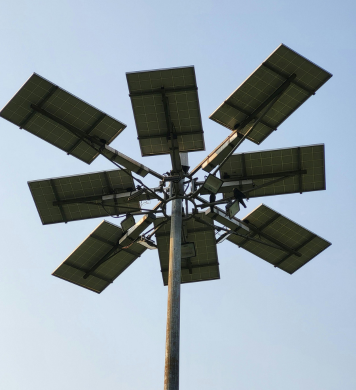
Additionally, “Solar Trees” and elevated ground mounts are allowing Indian farmers to grow crops underneath the panels, effectively getting two “harvests” from the same land.
Conclusion
The right choice depends on your specific site conditions. Rooftop solar is the champion of convenience and space-saving, making it perfect for the modern Indian city dweller. Ground-mounted solar is the champion of performance and scalability, making it the choice of power-hungry industries and landowners.
Regardless of where you place them, the most important step is choosing high-quality, Tier-1 components that can withstand the Indian climate for the next 25 years.
Which One Suits Your Property?
Still undecided between the roof and the ground? Let our engineers run a Dual-Option Simulation for you. We will model both setups on your property and show you the exact difference in generation and ROI.
Contact us today for a professional site evaluation and 3D solar layout.